Splunk Cluster Backup
A backup that knows a Splunk bucket. I wrote it for indexer clusters that stay on the premises: long retention, no object store, and disks that cannot hold the years.
- 01IndexerRead only. The tiers stay on the peer.
- 02Warm mirrorA bounded copy. The fastest way back.
- 03Cold stagingHolds the cold roll until the archive confirms it.
- 04ArchiveDisk or tape. The handoff is Veeam.
- 05PurgedThe local copy leaves only after that confirmation.
The same bucket can sit on several peers. One source is kept. A replica is not stored again as if it were new.
State moves forward only: synced, staged, archived, purged. A bucket that shows up again after purge is an integrity alarm, not a step backward.
Nothing on an indexer is written, deleted, or changed. The way out is find and rsync.
Restore starts as a time window. The plan names the peer and the thaweddb path, and spreads the buckets so one node is not flooded. A dry-run writes nothing. If the only copy is on tape, the plan says retrieval.
KV store and the cluster manager configs travel beside the buckets. A search-head cluster is read from its captain. A damaged archive is not restored.
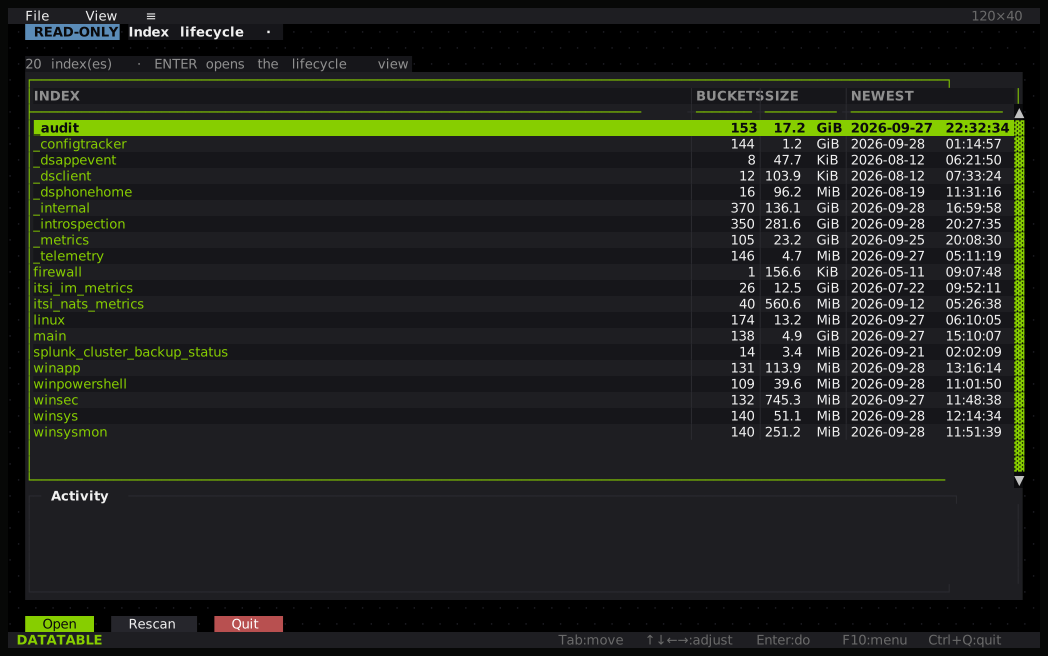
Open one index and the months are the story.
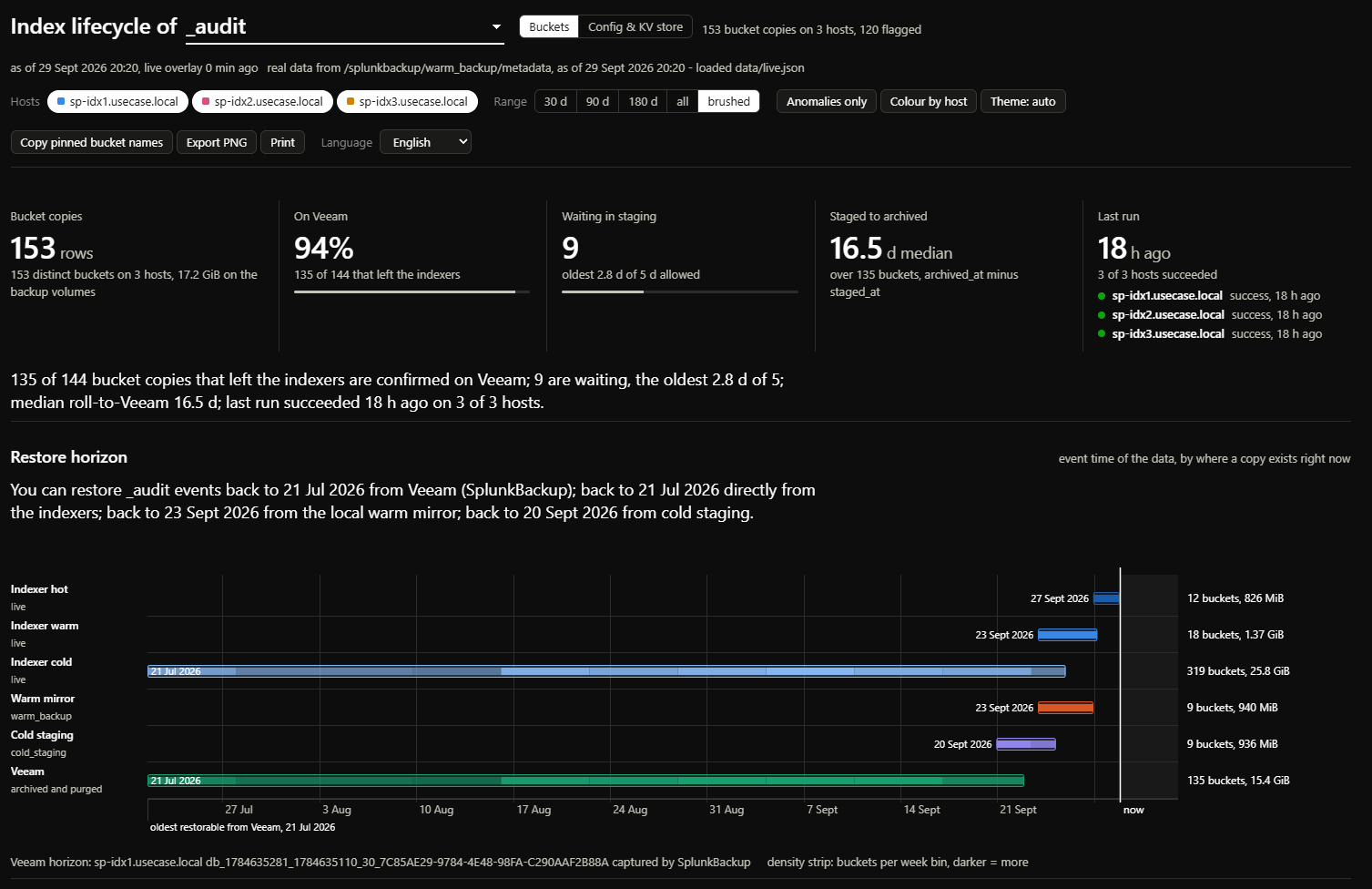
Each ribbon is one bucket. Color is where it sits today.
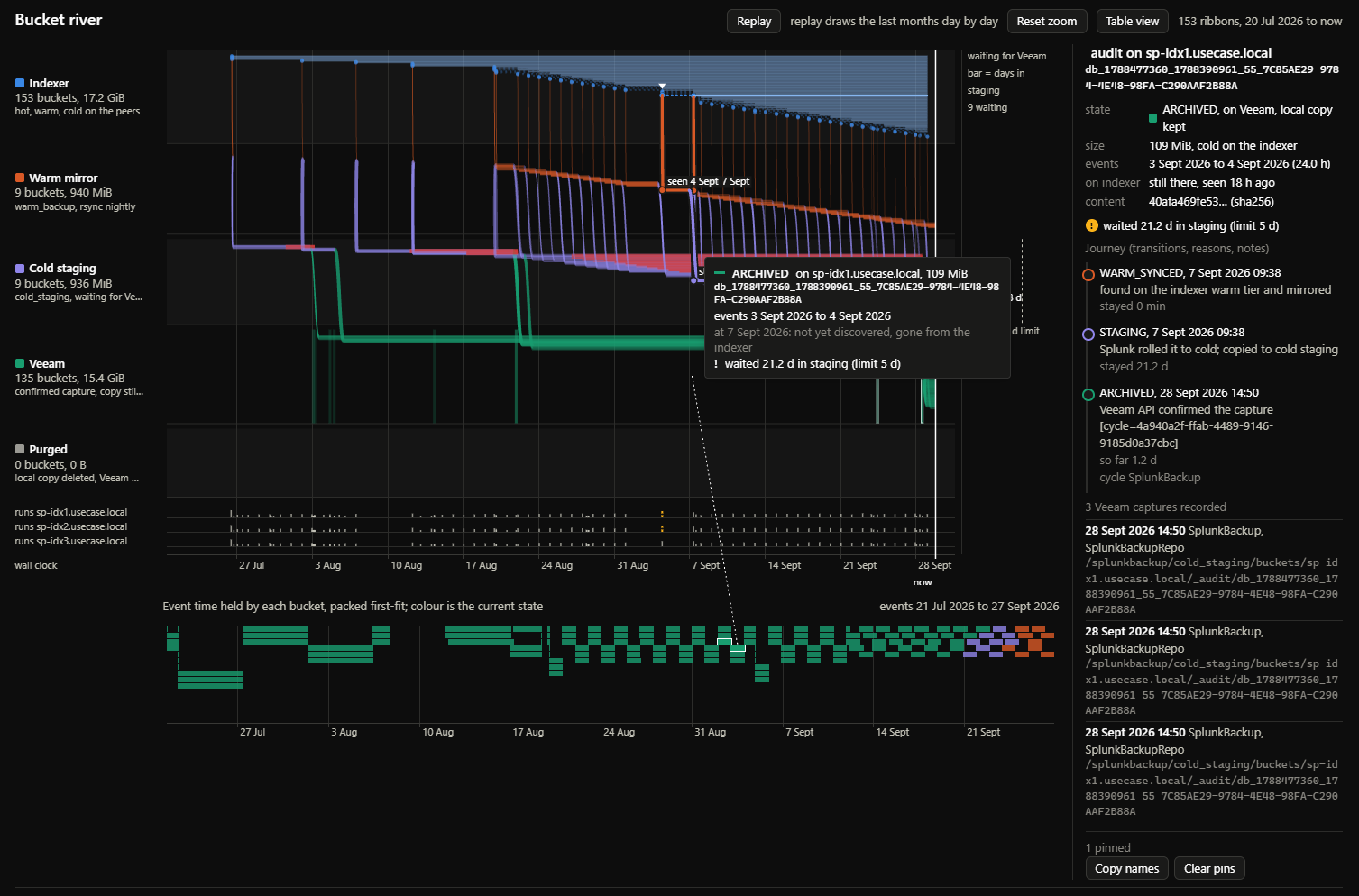
Hot is the live edge. Warm and cold are what has to be kept.
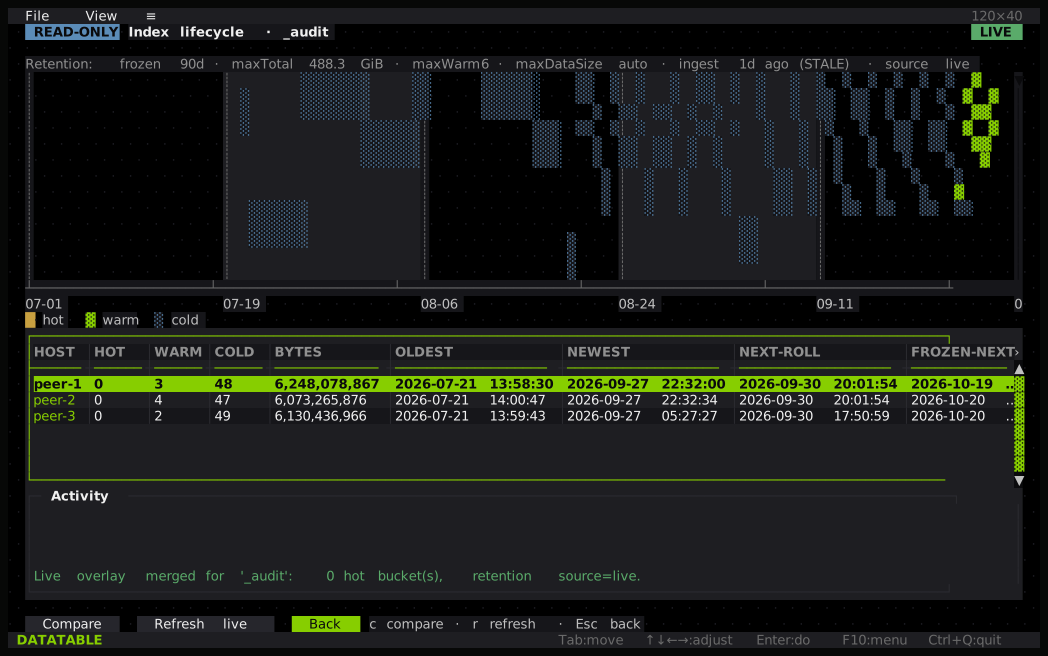
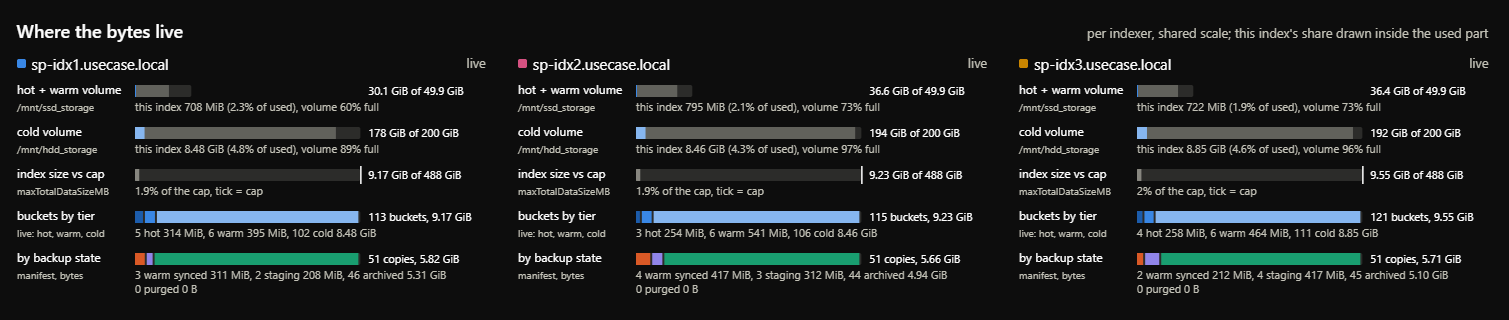
Disk is the limit.
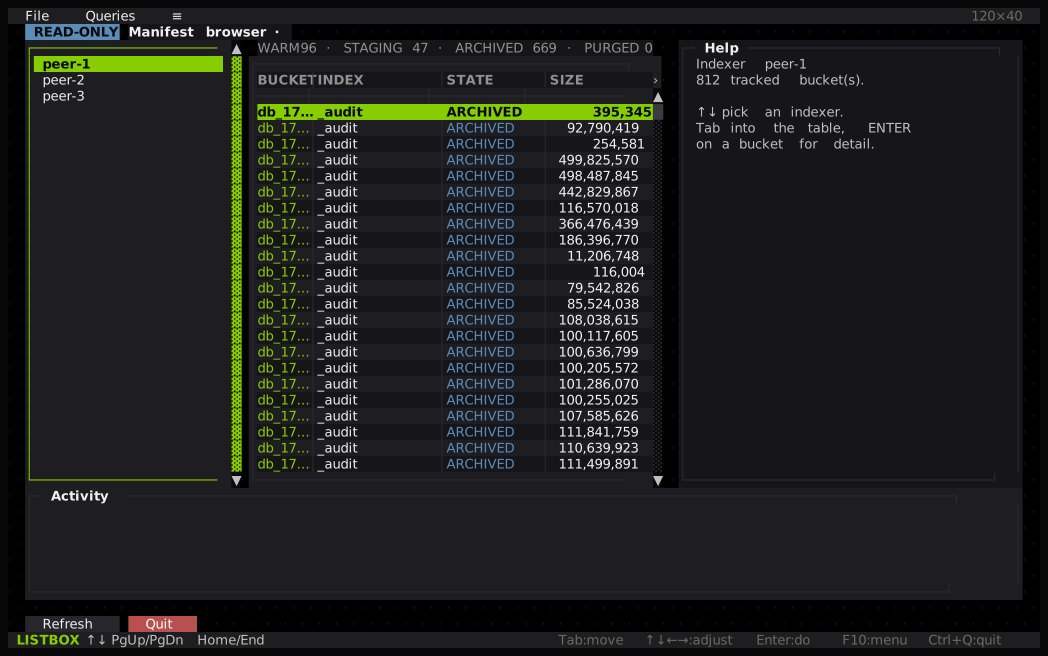
Each bucket keeps a single state. Warm, staging, archived, purged. The count above the table is the whole peer.
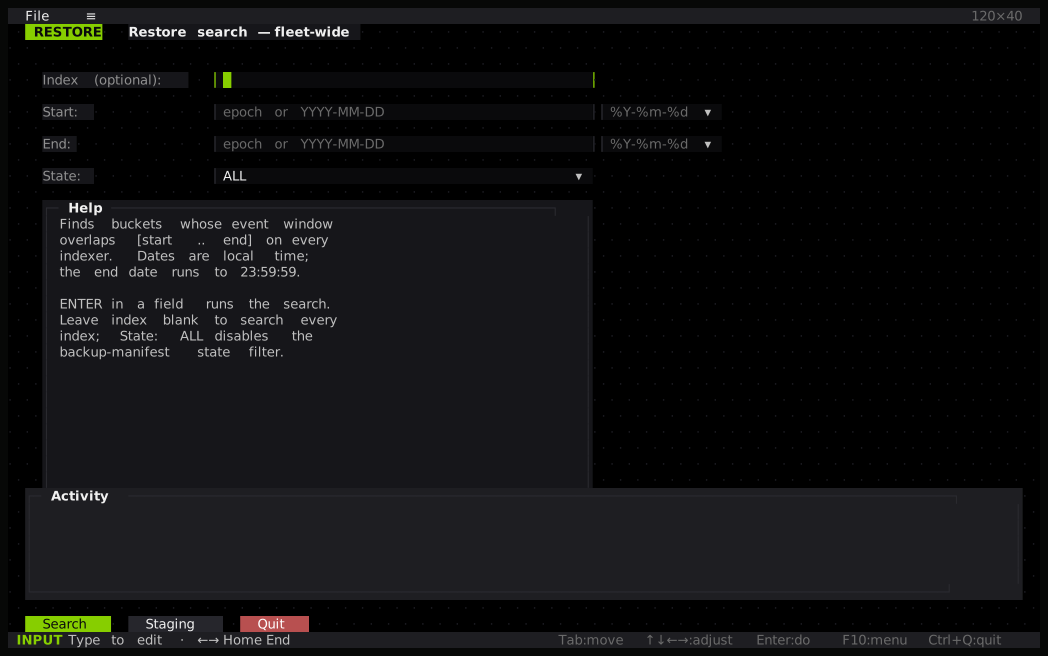
A restore starts as a window. Index, start, end. Balance across the peers comes before any copy.
Configs and the KV store sit in the same record.
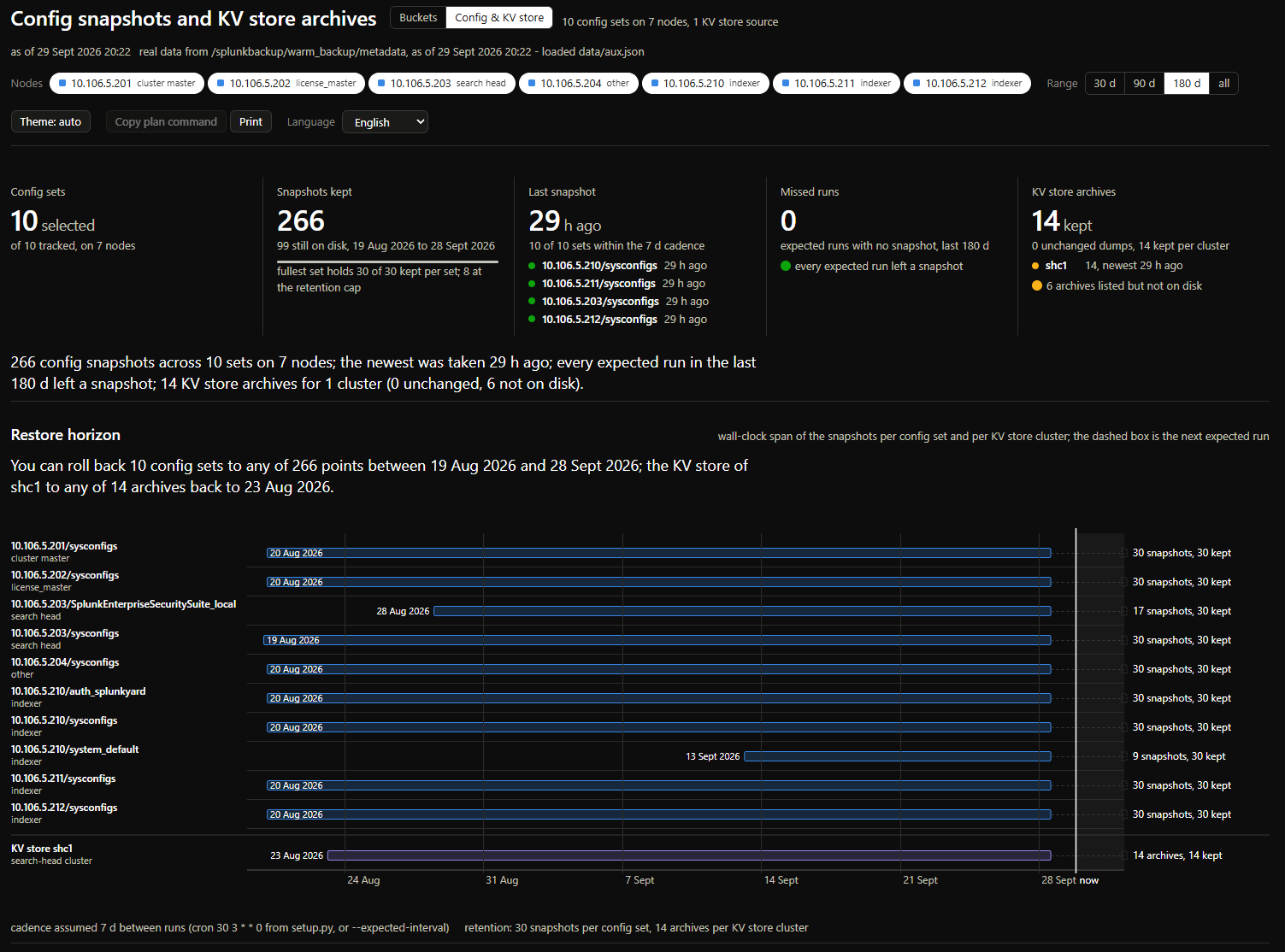
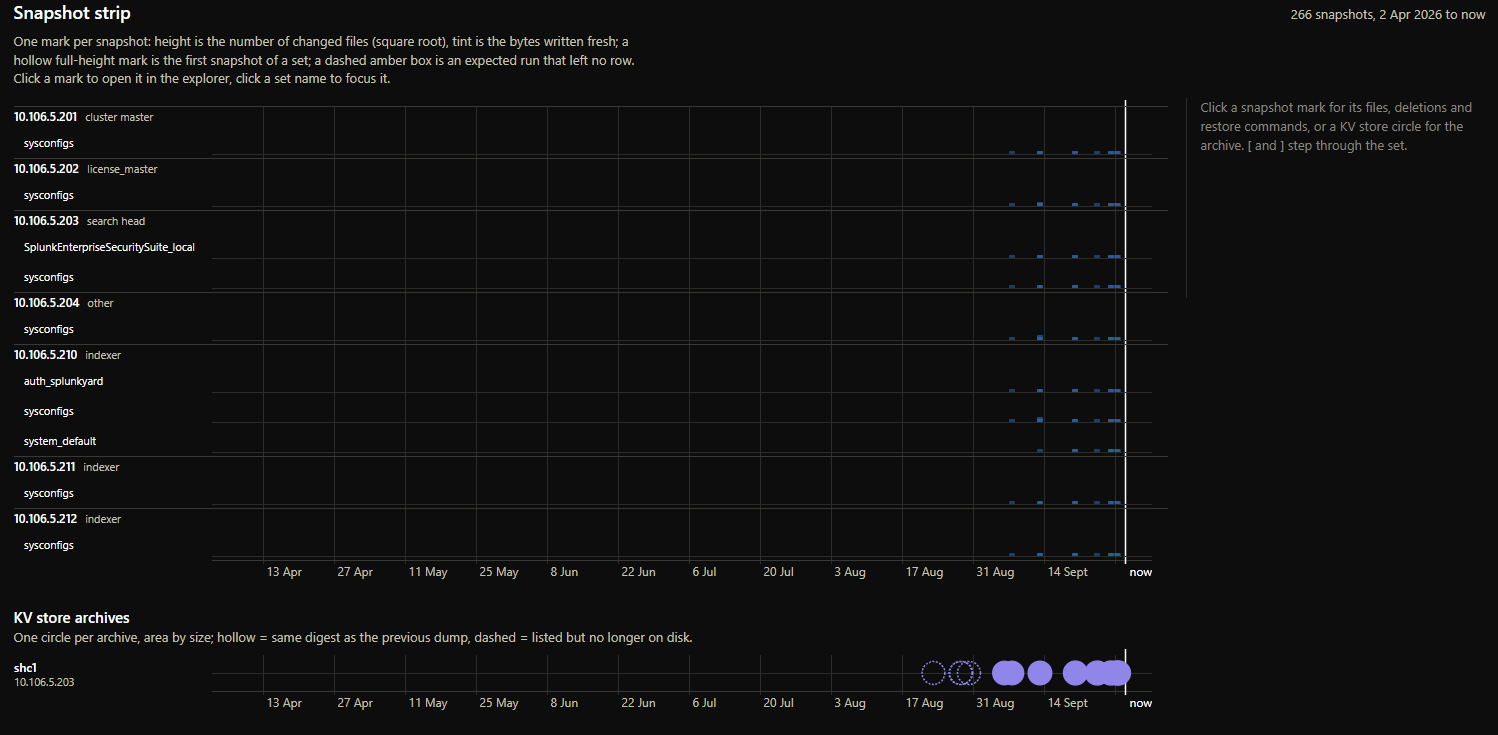
A mark for each snapshot. The circles are KV store archives.
Splunk AIO Backup
The single-host system this continues. One Splunk machine, not a replicated cluster.
Seven named days, Monday through Sunday, each one overwritten the next week. An unchanged bucket stays a hardlink, so the week is not seven full copies.
A failed day cannot be restored. Warm and cold buckets, the KV store, and the configs travel together. A small Splunk app watches the run.